
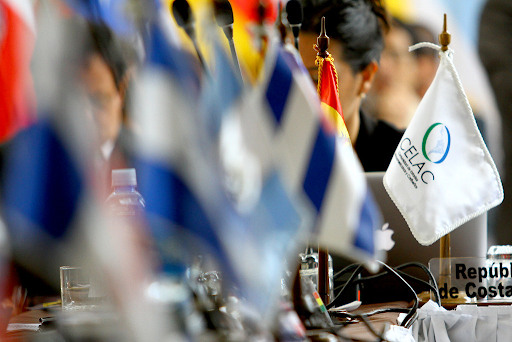
A leading policy expert has framed the EU-CELAC summit in Colombia as the “last high-level multilateral summit” of the year in the region, making it a critical, last-ditch opportunity for leaders to confront the escalating crisis of US military actions. Alexander Main, international policy director at the Center for Economic and Policy Research, noted that the postponement of this year’s Summit of the Americas has given this meeting an outsized importance.
Main’s analysis highlights a key variable: the United States is not a party to the EU-CELAC summit. This, he argues, “could make it easier for governments to frankly address the central issue of military deployment.” This “central issue” is a US operation that has killed over 60 people, which the summit’s host, Colombian President Gustavo Petro, has called “extrajudicial executions.”
Main identifies the topic as a “clear priority for several regional leaders,” suggesting a widespread desire to formulate a collective response. This analysis is supported by the actions of the Brazilian delegation. President Luiz Inácio Lula da Silva is attending to show “regional solidarity with Venezuela,” which is facing separate US military threats, further cementing the summit’s focus on security.
The summit is grappling with its own diplomatic issues, particularly the absence of top European officials like Ursula von der Leyen, which the hosts have attributed to “scheduling conflicts.” However, Main’s point suggests that even with a weaker EU presence, the summit’s value now lies in its function as a “safe” forum for Latin American and Caribbean leaders.
While the official agenda aims for a “Declaration of Santa Marta” on renewable energy and food security, Main’s analysis points to the real, underlying purpose of the gathering. It is the last, best chance for the region’s leaders to stand together and “frankly address” the deadly US military operations in their hemisphere without Washington in the room.