
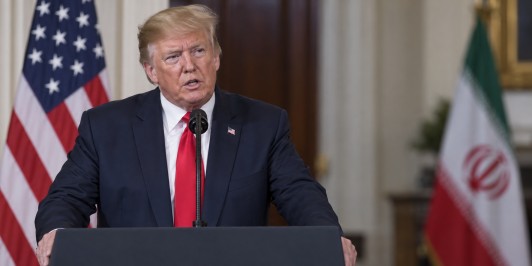
The ongoing tensions in the Middle East, particularly surrounding Iran’s nuclear ambitions and regional security, took center stage at the United Nations General Assembly where President Donald Trump addressed global leaders. Speaking in New York, Trump highlighted the duality of the U.S. approach towards Iran, balancing the potential for diplomatic negotiations with the looming threat of increased military action.
During his speech, President Trump reaffirmed the U.S. commitment to preventing Iran from developing nuclear weapons. He criticized Tehran for its refusal to engage in diplomatic talks, which he claimed led to increased military confrontations. Trump suggested that a potential agreement with Iran might be on the horizon, but only after the U.S. midterm elections set for November.
Trump also urged other nations to join in applying economic pressure on Iran, condemning the disruptions caused by Iranian actions in the Strait of Hormuz, a critical artery for global oil shipments. These disruptions have heightened concerns about the stability of energy supplies and regional security.
In addition to his remarks on Iran, President Trump took a strong stance against the International Criminal Court, urging member states to withdraw from the institution. He stated that the United States would not recognize international proceedings that involve U.S. military personnel, underscoring a broader theme of U.S. sovereignty and military independence.
Touching on other issues, Trump mentioned the Gaza ceasefire and ongoing reconstruction efforts, positioning these developments within the broader context of Middle Eastern conflicts and global crises discussed at the UN. His address echoed the ongoing complexities and challenges that define international relations in the current geopolitical climate.