
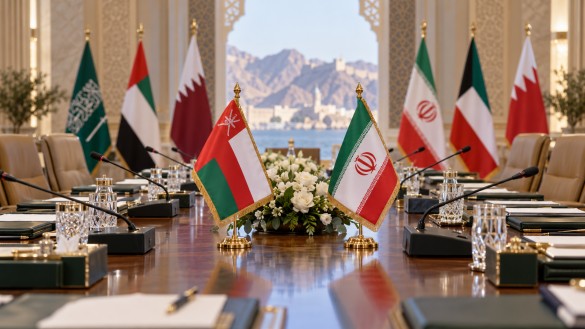
Oman’s Foreign Minister Badr Albusaidi has proposed a new regional security framework involving the six Gulf states, Iran, and Iraq, aiming to reduce reliance on external powers like the United States. Speaking at Girton College, Cambridge, Albusaidi emphasized the importance of including Iran in these arrangements to alleviate tensions and improve conflict resolution among Middle Eastern countries.
During his address, Albusaidi advocated for a non-aggression pact that would foster dialogue and shared responsibility among the regional players. He pointed out that the exclusion of Iran from past security discussions had exacerbated tensions and hindered collective progress. His proposal comes amid ongoing discussions in Tehran among senior officials from Türkiye, Pakistan, and Saudi Arabia, focusing on regional security and mitigating potential conflicts involving the United States and Iran.
Albusaidi underscored the strategic importance of the Strait of Hormuz, a critical passage for global energy shipments, and called for collaborative regional efforts to ensure its security and stability. He noted that prior negotiations between Washington and Tehran, facilitated by Oman, had been promising, suggesting that an agreement was within reach before tensions escalated.
The call for a regional security pact emerges against a backdrop of heightened tensions and infrastructure attacks across the Middle East, which have raised concerns about renewed military confrontations. Gulf countries face complex security challenges as they balance economic stability with diplomatic relations involving both Iran and the United States.
Despite the potential benefits of Albusaidi’s proposal, significant obstacles remain. Longstanding mistrust, coupled with Iran’s military activities and the security concerns of neighboring countries, pose challenges to achieving consensus. Any agreement would demand extensive negotiations and assurances from all involved parties.
Oman’s initiative reflects its ongoing commitment to fostering diplomacy and regional cooperation in the Middle East, as countries in the region explore ways to reduce tensions and establish a more autonomous security framework.