
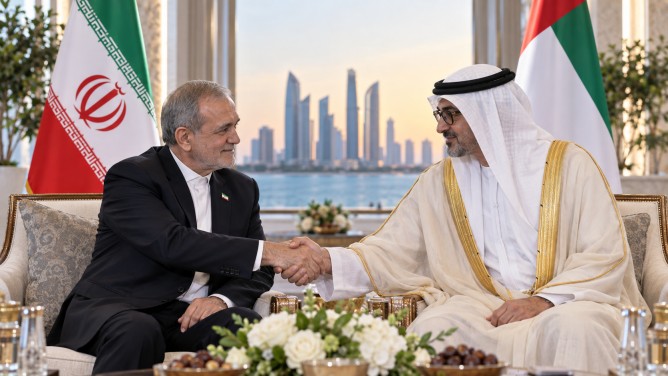
In an effort to mend ties and improve diplomatic relations, Iranian President Masoud Pezeshkian has emphasized a mutual desire between Iran and the United Arab Emirates (UAE) to “turn the page” on recent tensions. This statement follows a meeting with Abu Dhabi Crown Prince Sheikh Khaled bin Mohamed bin Zayed Al Nahyan, which took place on the sidelines of the BRICS Summit in New Delhi. Pezeshkian described the discussions as constructive, noting that both nations expressed a commitment to future cooperation and partnership.
The encounter represents the most significant diplomatic engagement between Iran and the UAE since the escalation of hostilities in West Asia. Previously, increased regional tensions led to the UAE’s decision to halt trade and financial transactions with Iran, straining bilateral relations. During their meeting, the leaders exchanged views on regional and international issues, focusing on de-escalation, stability, and the promotion of peace and development. This dialogue occurred shortly after Iran, the UAE, and other BRICS countries issued a joint statement advocating for restraint in the ongoing conflict.
Despite the challenges, the UAE continues to hold economic significance for Iran, with Dubai serving as a crucial commercial hub for the Iranian diaspora. This city remains a vital conduit for economic activities, even as international sanctions persist. The potential for renewed economic engagement underscores the importance of diplomatic efforts to ease tensions and foster collaboration.
Meanwhile, U.S. President Donald Trump has expressed a lack of concern regarding a proposed meeting between Iran and Gulf states focusing on the Strait of Hormuz. The meeting, which is scheduled to occur in Oman, comes amid ongoing tensions between Washington and Tehran. As the region remains a focal point for international diplomacy, any efforts to reduce hostilities and promote dialogue are closely watched by global powers.