
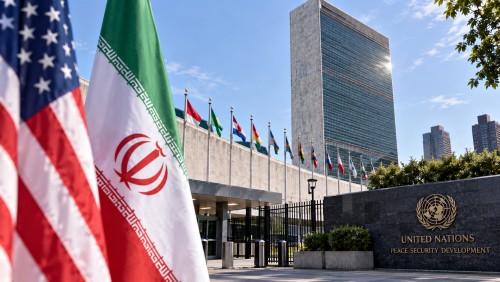
The United States and Iran continue to navigate a complex diplomatic landscape marked by ongoing conflicts and intermittent negotiations. Amid this backdrop, the U.S. has announced that it will permit senior Iranian officials to attend the upcoming United Nations General Assembly in New York. This decision underscores Washington’s adherence to its obligations as the host country of the UN, despite the tensions with Tehran.
The U.S. State Department confirmed that a core Iranian delegation, including Iranian President Masoud Pezeshkian and Foreign Minister Abbas Araqchi, will be granted visas for the event. This allowance comes even as the U.S. maintains stringent travel restrictions on Iranian officials, limiting their movements to specific locations such as the UN headquarters, Iran’s UN mission, and the Iranian ambassador’s residence in New York.
The backdrop to this diplomatic engagement is the conflict that erupted on February 28, following U.S. and Israeli strikes on Iran. In retaliation, Tehran launched attacks against Israel and Gulf states that host U.S. military bases. Against this turbulent setting, both nations have engaged in sporadic diplomatic talks aimed at resolving the hostilities.
Under the 1947 UN headquarters agreement, the United States is generally expected to facilitate access for foreign diplomats to the UN. However, it retains the right to deny visas based on considerations of security, terrorism, or foreign policy. This framework has guided the U.S. in its current dealings with Iran, allowing the delegation’s participation in the General Assembly while maintaining national security protocols.
In a related development, the U.S. has opted to deny entry to Palestinian officials, including President Mahmoud Abbas, for the same UN event. This decision highlights the complex and often selective nature of diplomatic engagements at the international level, reflecting broader geopolitical tensions.